From agriculture to advanced materials, hemp fibres are becoming part of Europe’s transition toward more circular industries.
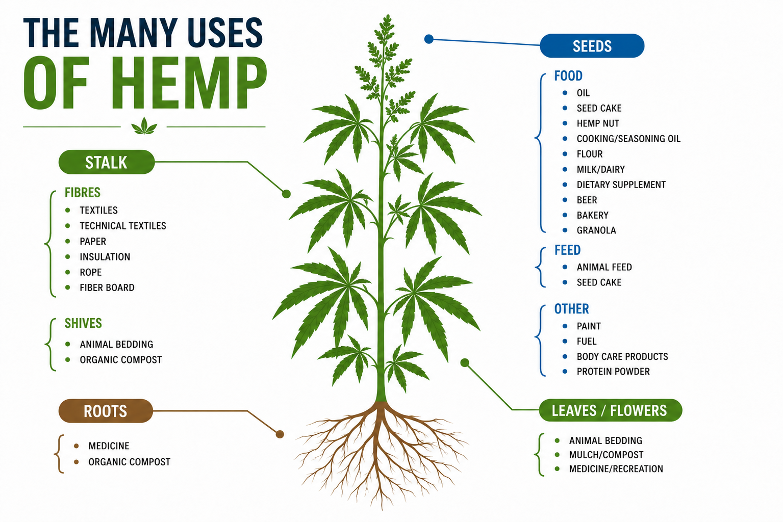
As climate challenges intensify and industries search for lower-impact materials, the qualities of hemp fibre are gaining renewed attention across Europe. In 2024, hemp cultivation already covered more than 51,000 hectares across the continent (mainly in France, Germany, Estonia, Netherlands, Finland, and Latvia) reflecting the growing interest in this versatile crop. Almost every part of the plant can be valorised, from fibres used in textiles, composites and insulation to seeds for food and cosmetics, and woody shives for construction materials such as hemp concrete.
Hemp combines both environmental resilience and industrial potential as it:
- grows up to 3 metres in a few months
- requires relatively little water
- can generally be cultivated without pesticides during growth
- supports biodiversity and helps naturally suppress weeds
- fits easily into existing European crop rotations
Before they can be used in materials, hemp fibres need to be extracted, sorted and prepared according to their final application. Their length, regularity and resistance strongly influence what they can become:
- long fibres can be transformed into yarns, woven fabrics or aligned tapes
- shorter fibres are better suited to non-woven mats, plastics or moulded parts
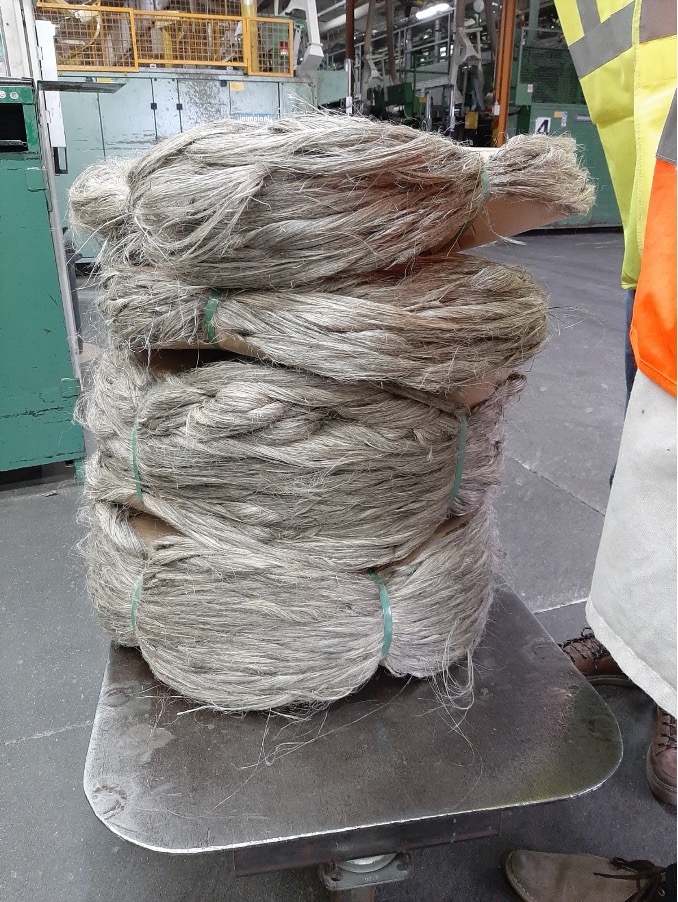
This is why extraction and processing methods matter: scutching, hackling, carding or breaking rollers do not produce the same fibre formats or the same mechanical potential.
This diversity also supports the full valorisation of the plant. Rather than producing a single material, hemp can generate several fibre grades adapted to different industrial uses, from textiles and insulation to structural composite reinforcements. The challenge is therefore not only to grow hemp, but to obtain the right fibre quality for the right application.
Hemp in composites: when a plant becomes a technical material
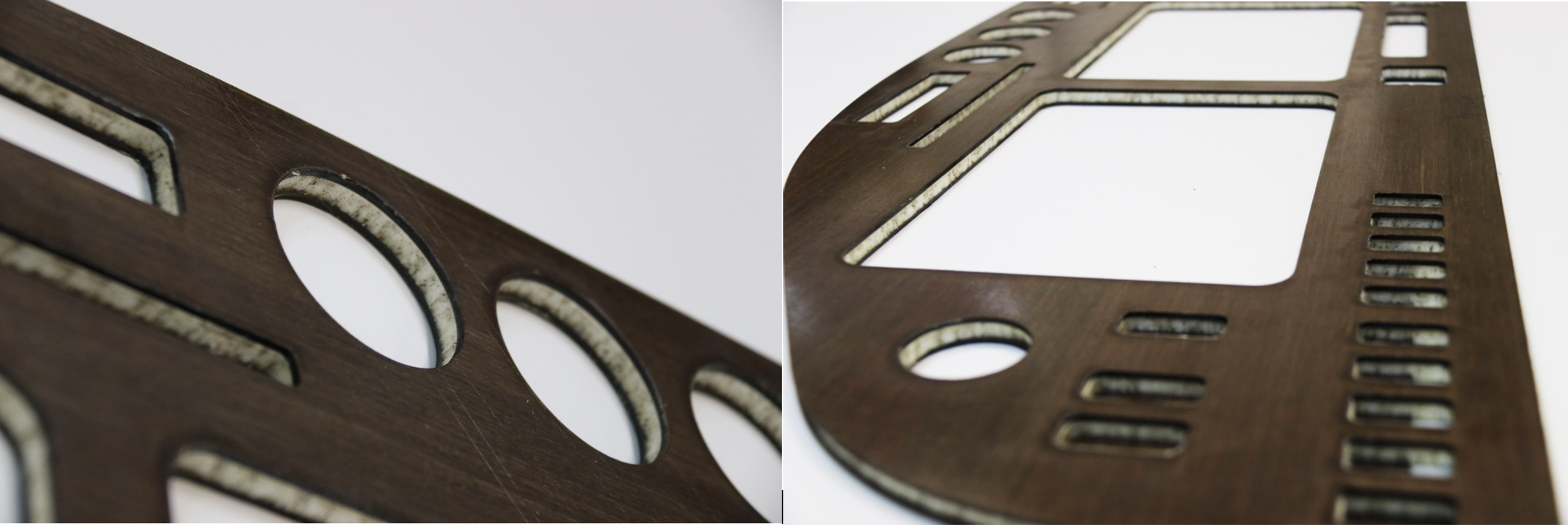
Once hemp fibres leave the primary processing plant, they can be transformed into composite materials. A composite combines two elements: a matrix, usually a resin or polymer, that gives the material its shape, and fibres that provide strength and reinforcement. Hemp fibres can therefore replace part of the glass or carbon fibres used in certain industrial applications.
Hemp-based composites are valued for combining several advantages at once:
- lightweight structures
- mechanical strength
- thermal and acoustic insulation
- vibration damping
- renewable and bio-based origin
Plant fibres can already represent 20% to 50% of some composite materials and today, hemp composites are already used or explored in sectors such as automotive, construction, furniture, technical textiles and geotextiles.
SSUCHY-Next: connecting hemp fibres to real composite applications
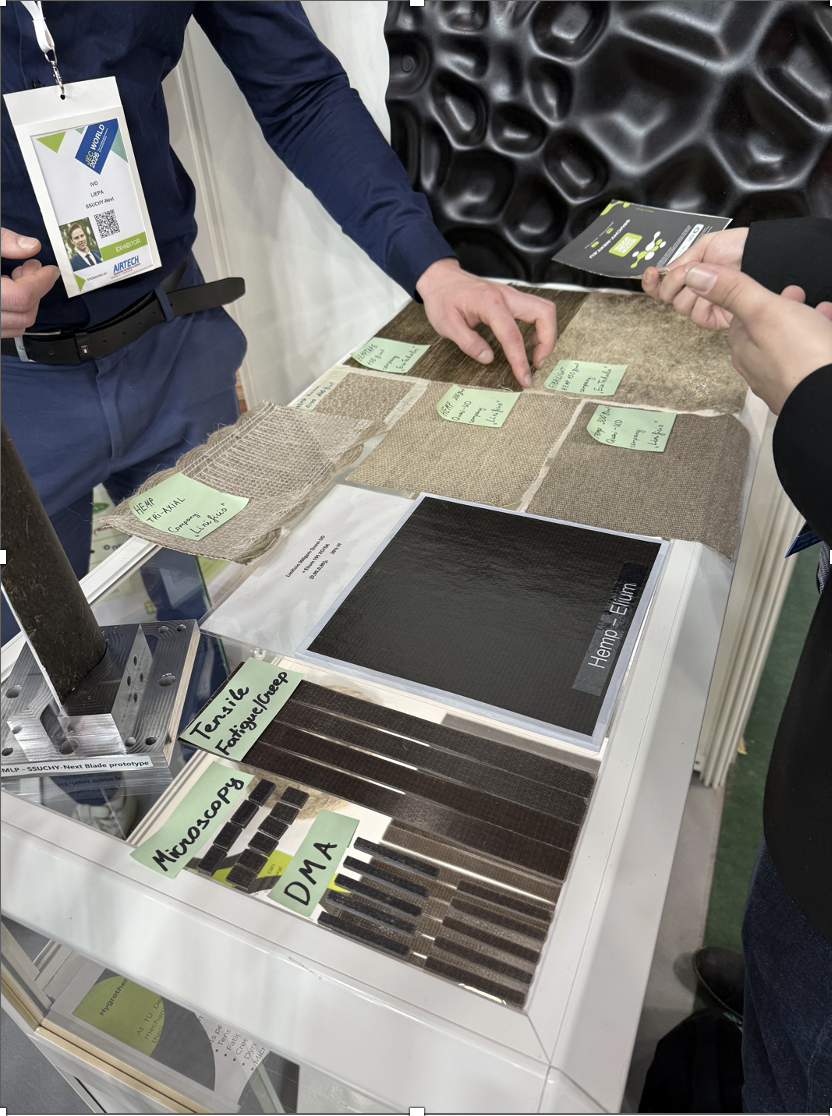
Building on these developments, SSUCHY-Next aims to develop hemp-based composite materials across the full value chain, from fibre production to demonstrators, bringing key technologies closer to industrial use. Several partners work on different ways to extract and prepare hemp fibres depending on their length and final use:
- Terre de Lin focuses on long fibres obtained through scutching and hackling
- Ecotechnilin then develops hemp-based reinforcement products, including a hemp version of its FlaxTape® technology and non-woven materials
- Linificio transforms fibres into woven and quasi-unidirectional fabrics for composite applications.
This step is central because SSUCHY-Next does not treat hemp as one single material. Instead, each fibre format is directed toward a relevant application:
- long fibres for high-quality reinforcements used in structural composites;
- medium fibres for lower-cost reinforcement yarns and fabrics;
- short fibres for moulded parts using BMC or SMC processes.
The project also works on the matrix. Partners develop bio-based and recyclable resin systems, including Elium®, benzoxazine and BG-epoxy, in order to avoid relying only on conventional fossil-based resins. These materials are then tested at composite level to assess fibre-matrix compatibility, durability, mechanical performance, fire behaviour and vibration damping.
Several demonstrators show how these hemp composites could be used in practice:
- a 12.6-metre wind turbine blade,
- wood-hemp materials for construction applications
- leather-like alternatives
- façade elements
- traffic signs and electrical enclosures.
The project also evaluates recycling routes and life cycle impacts, so the materials are assessed not only for performance, but also for circularity and environmental relevance.
Soon, these discussions will continue beyond the project itself. From 24 to 26 November 2026, SSUCHY-Next will take part in the World Hemp Forum in Troyes, France, bringing together researchers, manufacturers and industry stakeholders working on the future of industrial hemp and bio-based materials.
References :
FRD-CODEM. (2025, March). Panorama des marchés : Fibres végétales techniques à usages matériaux (hors bois) – Mémento 2025. InterChanvre. https://www.interchanvre.org/documents/5.actu_presse/documents_de_reference/Memento_2025.pdf
InterChanvre. (2026, January 16). Le chanvre, une filière d’avenir [Video]. YouTube. https://www.youtube.com/watch?v=rSfC6ER51EM
InterChanvre. (n.d.). InterChanvre – Newsletters. Retrieved May 13, 2026, from https://www.interchanvre.org/publications#publications_02
Pôle européen du chanvre. (n.d.). World Hemp Forum 2026. from https://www.pole-europeen-chanvre.eu/world-hemp-forum/
Terres Inovia. (2026, January). Chanvre : Guide de culture 2026. Terres Inovia. https://interchanvre.org/documents/5.actu_presse/documents_de_reference/Guide_chanvre_2026_Terres-Inovia.pdf
SSUCHY Project, 2018-2022, Book of final results : https://www.ssuchy.eu/wp-content/uploads/2022/04/SSUCHY-Del-11.12-Book-Of-Final-Results.pdf