
Who is driving SSUCHY-Next forward? Between late June and early September 2026, our Work Package Leader campaign introduced the people coordinating the project’s key activities, from hemp fibres and bio-based resins to large-scale demonstrators, sustainability, communication and exploitation.
Through a series of short interviews, the eight Work Package Leaders shared their role, their objectives and the challenges behind their work. Together, their contributions show how the different parts of SSUCHY-Next connect to move bio-based composite solutions from material development and testing towards industrial applications.
Here is a recap of the campaign and the people coordinating these activities.
WP1 – Pierre Ouagne (UTTOP)
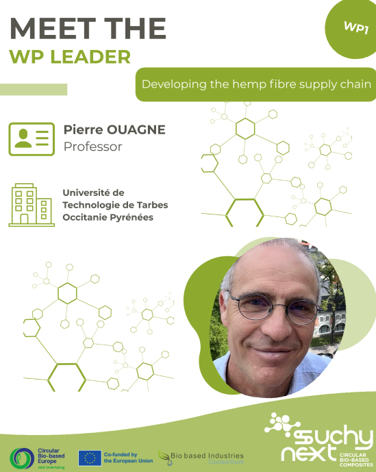
From hemp stems to high-performance reinforcements
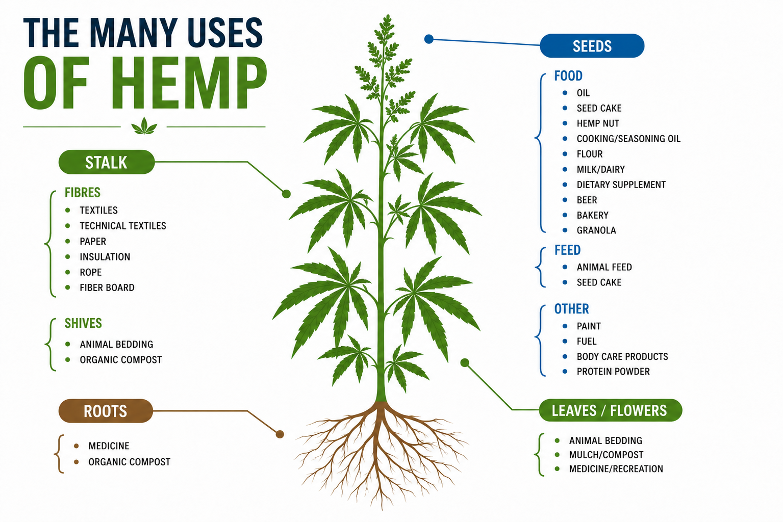
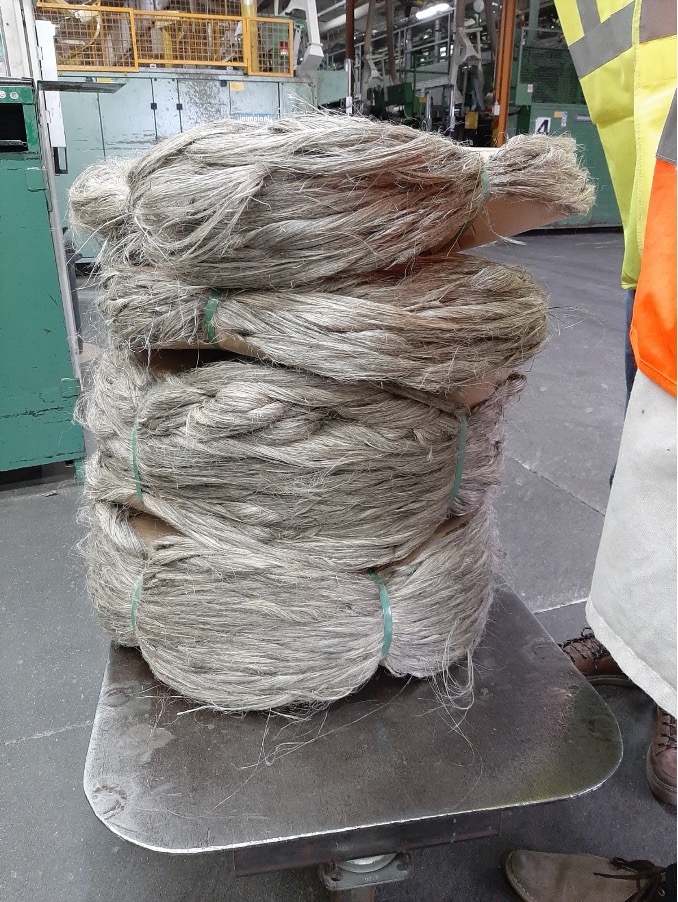
Pierre Ouagne, Senior Lecturer at UTTOP, coordinates WP1, dedicated to the production of hemp fibre reinforcements at industrial scale. The work explores different processing routes, from scutched and hackled fibres to lower-cost approaches based on more conventional harvesting and fibre extraction equipment.
One of the main challenges is achieving sufficiently homogeneous fibres and producing high-performance roving-type yarns that can ultimately be used in the project’s demonstrators.
WP2 – Leila Bonnaud (Materia Nova)
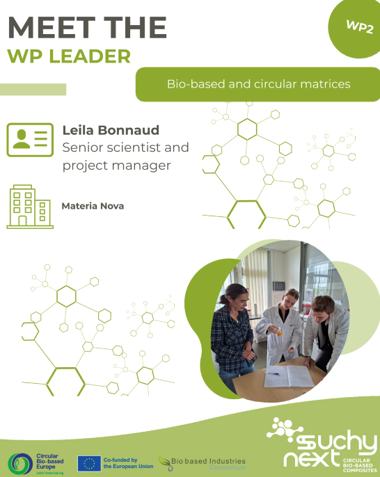
Developing high-performance bio-based resin
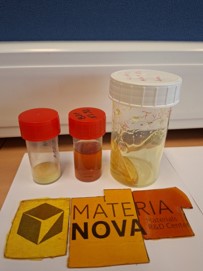
Leila Bonnaud, Senior Scientist and Project Manager at Materia Nova, leads WP2, which focuses on the development of bio-based, circular and reprocessable resin systems.
The objective is to bring high-performance bio-based resins towards TRL 7 and validate laboratory developments at industrial scale. A key issue highlighted during the campaign is the sourcing of suitable bio-based reagents within Europe.
WP3 – Aart van Vuure (KU Leuven)
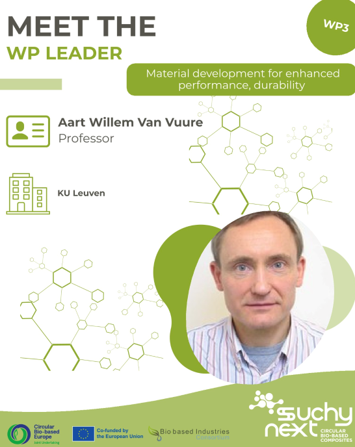 Understanding and improving material performance
Alongside his role as SSUCHY-Next coordinator, Professor Aart van Vuure leads WP3, dedicated to material development, characterisation and testing.
The work assesses the suitability of the materials developed in the project for biocomposite applications and seeks to improve properties such as durability, fibre-matrix adhesion and damping performance. Current challenges include processing the new bio-based resins into high-quality composites and achieving the required fibre volume fractions.
WP4 – Philipp Haselbach (DTU Wind and Energy Systems)
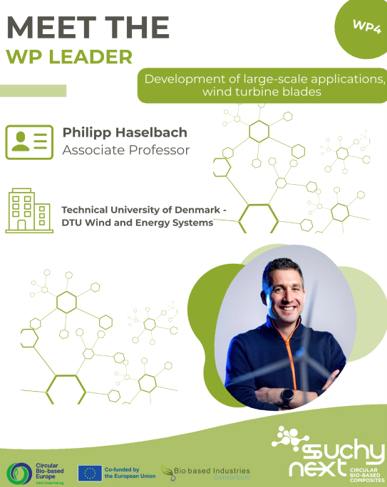 Scaling bio-based composites up to a 12.6-metre wind turbine blade
Associate Professor Philipp Haselbach leads WP4, where DTU and its partners are developing, manufacturing and testing a full-scale 12.6 m wind turbine blade using hemp fibre reinforcements and a bio-based Elium® resin system.
This demonstrator will help assess the processability and structural performance of the materials at a scale representative of wind energy applications. An important challenge is obtaining sufficiently detailed material and processing data to support modelling and experimental validation.
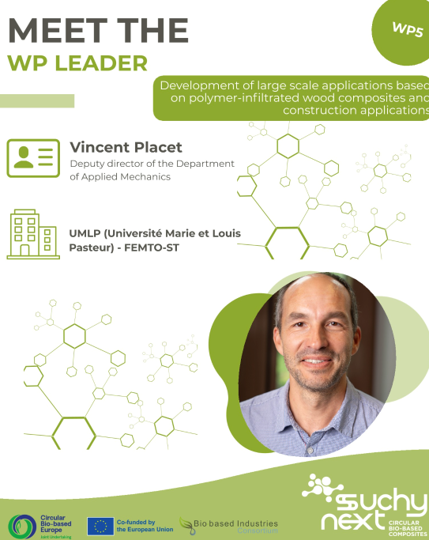
WP5 – Vincent Placet (Université Marie et Louis Pasteur – FEMTO-ST)
 Towards more sustainable polymer-modified wood composites
Vincent Placet, Deputy Director of the Department of Applied Mechanics at FEMTO-ST, leads work on polymer-modified wood composites within WP5.
His team contributes expertise on plant fibre- and wood-based composites, with particular attention to their hygro-mechanical behaviour. The objective is to improve the performance, circularity and sustainability of these materials so they can offer lower-impact alternatives for construction applications.
The work also requires close coordination between developments taking place across different partners and the successful scale-up of the bio-based polymers used in the hybrid materials.
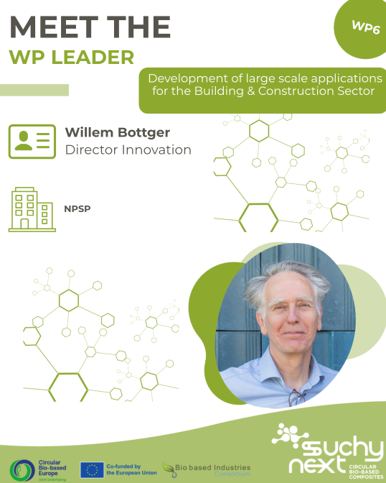
WP6 – Willem Bottger (NPSP)
 Designing bio-based façade panels for buildings
Willem Bottger, Director Innovation at NPSP, leads the activities around the project’s bio-based façade panel demonstrator in WP6.
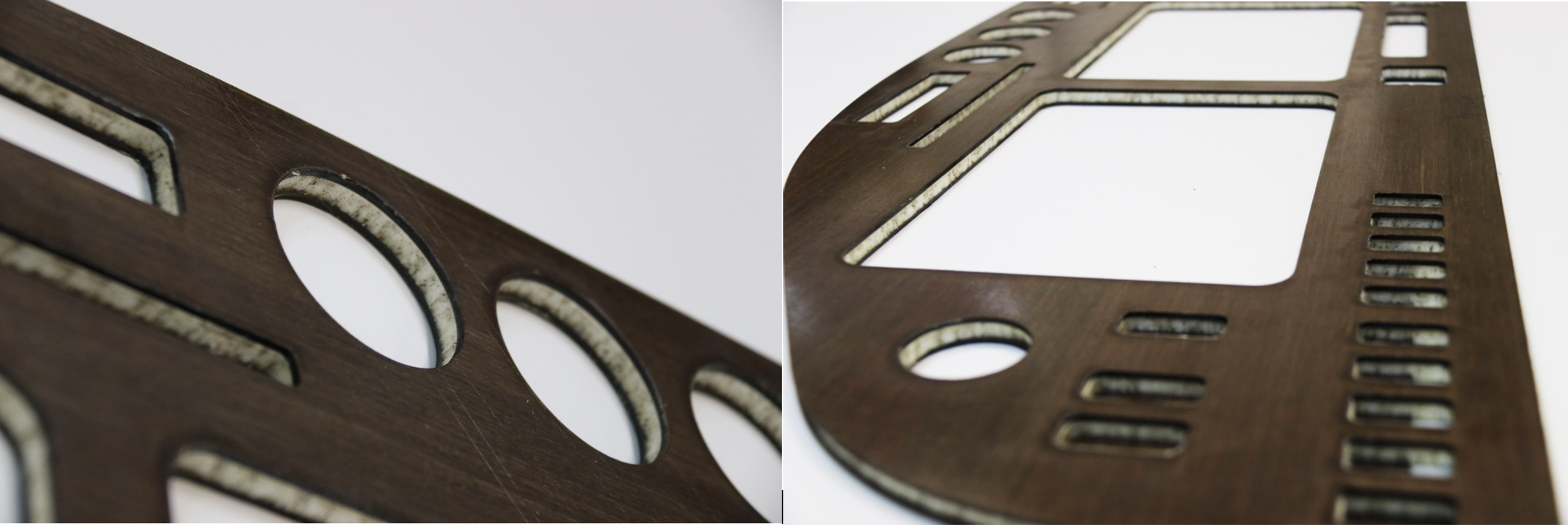
The work combines hemp fibres and bio-based resin systems to develop façade panels suitable for large-scale construction applications. The team is also developing modelling tools to predict and optimise mechanical properties while reducing material use, cost and environmental impacts.
One current focus is increasing sample-production throughput to generate the data required for the model.
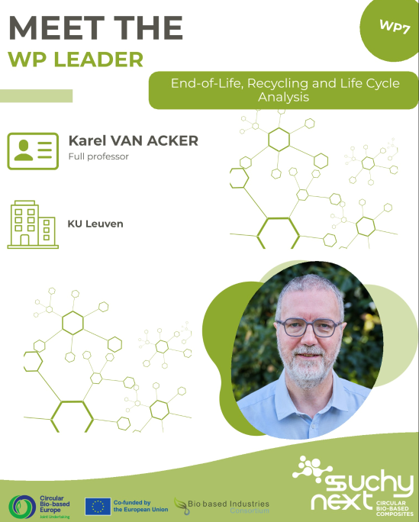
WP7 – Karel Van Acker (KU Leuven)
 Putting sustainability and circularity at the heart of material development
Professor Karel Van Acker leads WP7 – End-of-Life, Recycling and Life Cycle Analysis. The work package assesses the environmental impacts and circularity of the solutions developed throughout SSUCHY-Next and provides feedback to the technical teams to guide material and process choices. WP7 is the project work package dedicated to Life Cycle Analysis and recycling.
A major challenge is obtaining reliable data across complete value chains. As highlighted during the campaign, a bio-based material is not automatically more sustainable: its performance needs to be assessed across its full life cycle.
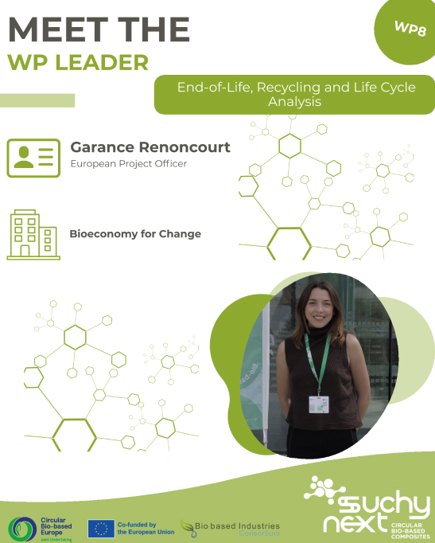
WP8 – Garance Renoncourt (Bioeconomy For Change)
 Connecting project results with the people who can use them
Garance Renoncourt, European Projects Officer at Bioeconomy For Change, leads WP8, dedicated to dissemination, communication and exploitation.
The work package aims to make SSUCHY-Next results visible and understandable, engage stakeholders across the value chain and support their future uptake beyond the project. One of its main challenges is translating highly technical research into accessible content while representing the contributions of a diverse European consortium.
The WP Leader campaign itself was developed within these communication activities and ran throughout summer 2026.
One project, complementary expertise
As seen above, each Work Package contributes to a different stage of the project, combining material development, large-scale demonstrators, environmental assessment and exploitation to advance high-performance bio-based composites towards industrial applications.
The campaign also highlighted a common theme across the interviews: the value of bringing together researchers, industrial partners and specialists with very different expertise. This combination allows developments to move across the whole value chain, from raw materials and laboratory research to demonstrators and future market applications.
Missed one of the interviews? Follow SSUCHY-Next on LinkedIn to discover the individual WP Leader posts and learn more about the people behind the project.

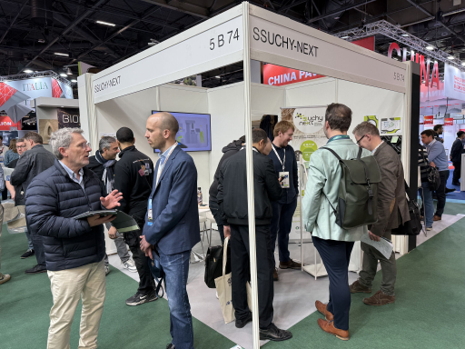 SSUCHY-Next
 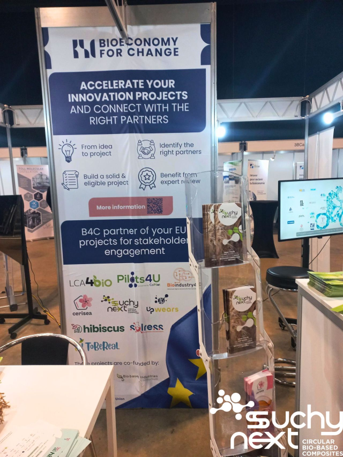 Dedicated to key enabling technologies for the bioeconomy, BIOKET provided an opportunity to present SSUCHY-Next’s materials at the Bioeconomy For Change stand.
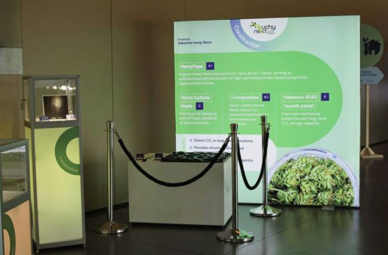 The Circular Bio-based Europe Joint Undertaking Stakeholder Forum brought together bioeconomy stakeholders to exchange on the development and deployment of bio-based solutions in Europe.
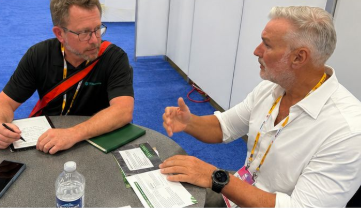 Bitrez represented SSUCHY-Next at the American Coatings Show, bringing the project to professionals from the coatings and associated materials industries.
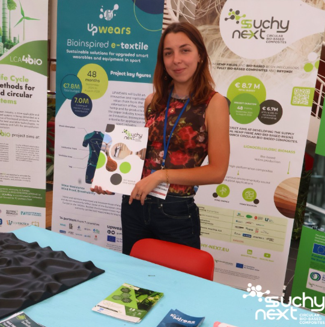 SSUCHY-Next was showcased at the European Projects stand during the 24H of Bioeconomy For Change, which combined innovation pitches, workshops, B2B meetings and networking.
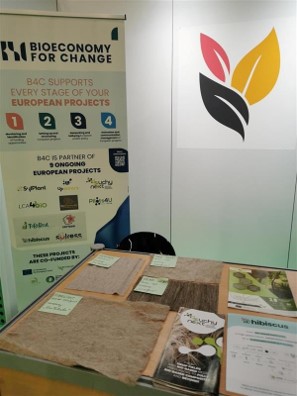 SSUCHY-Next participated in the Village de la Bioéconomie during a day dedicated to Europe’s role in accelerating bioeconomy innovation.
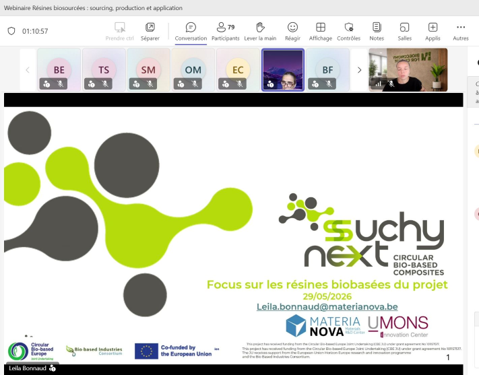 Organised by Bioeconomy For Change, the webinar “Bio-based resins: sourcing, production and applications” brought together industrial and research perspectives on renewable alternatives for resin production.
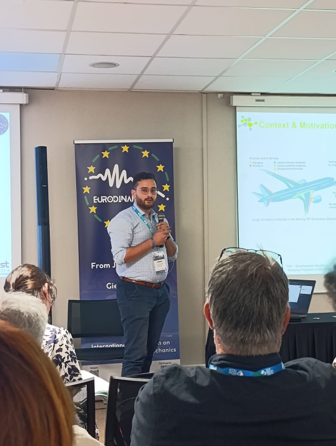 Mohamed Amine Belahcen from Université Marie et Louis Pasteur represented SSUCHY-Next at EURODINAME III, an international conference dedicated to structural dynamics.
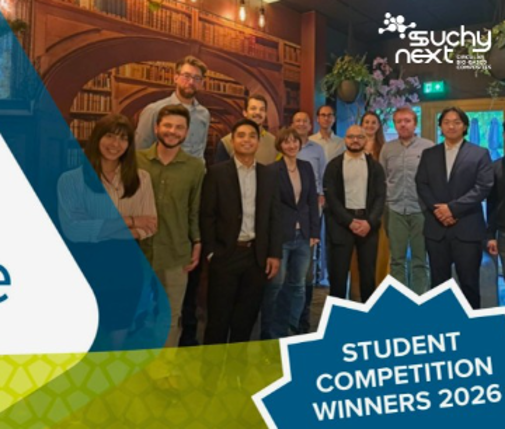 Sander Van de Vel from KU Leuven presented SSUCHY-Next research at the SAMPE Benelux Student Competition, held during the Spring Meeting hosted by GKN Fokker Aerospace.
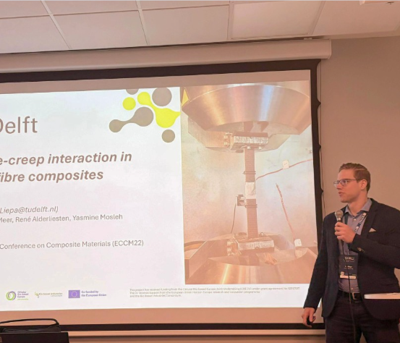 The 22nd European Conference on Composite Materials provided a forum for two SSUCHY-Next researchers to share findings on composite performance and durability.
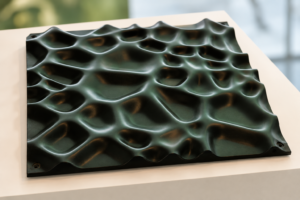
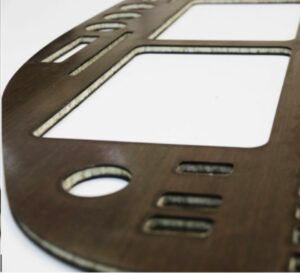


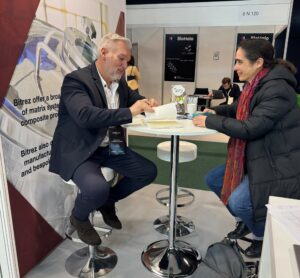
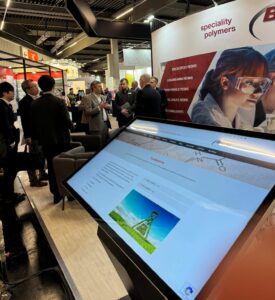 SSUCHY-Next was presented at the European Coatings Show (ECS) 2025 through the participation of Bitrez, a specialist in the design and manufacture of advanced polymers and synthetic resins. Held in Nuremberg, ECS is the world’s leading exhibition for paints, coatings, adhesives and sealants, bringing together industrial formulators, processors and research stakeholders from across Europe and beyond.
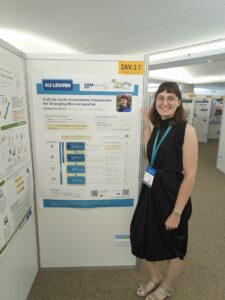 The SAM research group from KU Leuven represented the project at the 33rd European Biomass Conference & Exhibition in Valencia. As one of Europe’s leading events dedicated to the bioeconomy, EUBCE provided a key forum for exchanges on the sustainable valorisation of biomass residues and their transformation into biofuels, biochemicals and advanced biomaterials.
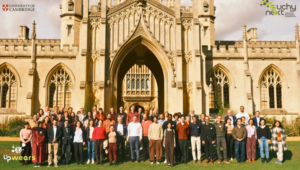 The academic and training dimension of SSUCHY-Next was strongly highlighted at the 3rd European Summer School on Bio-based Composites (ESBBC-3), hosted by the University of Cambridge at St John’s College. As a unique European initiative dedicated to bio-based composites, the Summer School brought together Master’s and PhD students, early-career researchers, academics and industry representatives. SSUCHY-Next builds on this legacy, as its predecessor project, SSUCHY, was among the founding members of the initiative.
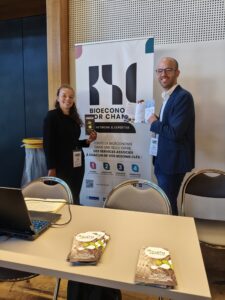 SSUCHY-Next was also represented at the 7th “Fibres Naturelles et Polymères” Colloquium in Troyes through the participation of B4C, with contributions from its experts Jean Bausset and Audrey Magnin. The event brought together industrial stakeholders, researchers and institutional actors involved in the development of bio-based composites and polymers, offering a forum for high-level technical and strategic exchanges.
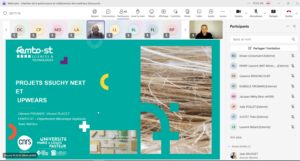 SSUCHY-Next was also featured in the spotlight during a Bioeconomy For Change webinar held on 21 November, dedicated to the ageing and durability of bio-based materials. This online event provided a focused forum to address one of the key challenges for the industrial deployment of bio-based composites: their long-term performance under real-world environmental conditions.