
SSUCHY-Next partners gathered in Besançon, France, on 22 and 23 September 2026 for the project’s 5th Consortium Meeting, hosted by Université Marie et Louis Pasteur (UMLP) and FEMTO-ST. Over two days, partners reviewed the latest technical progress across the project, visited local research facilities and worked together on the next steps towards SSUCHY-Next’s key demonstrators.
SSUCHY-Next 5th Consortium Meeting – Besançon, France – 22–23 September 2026
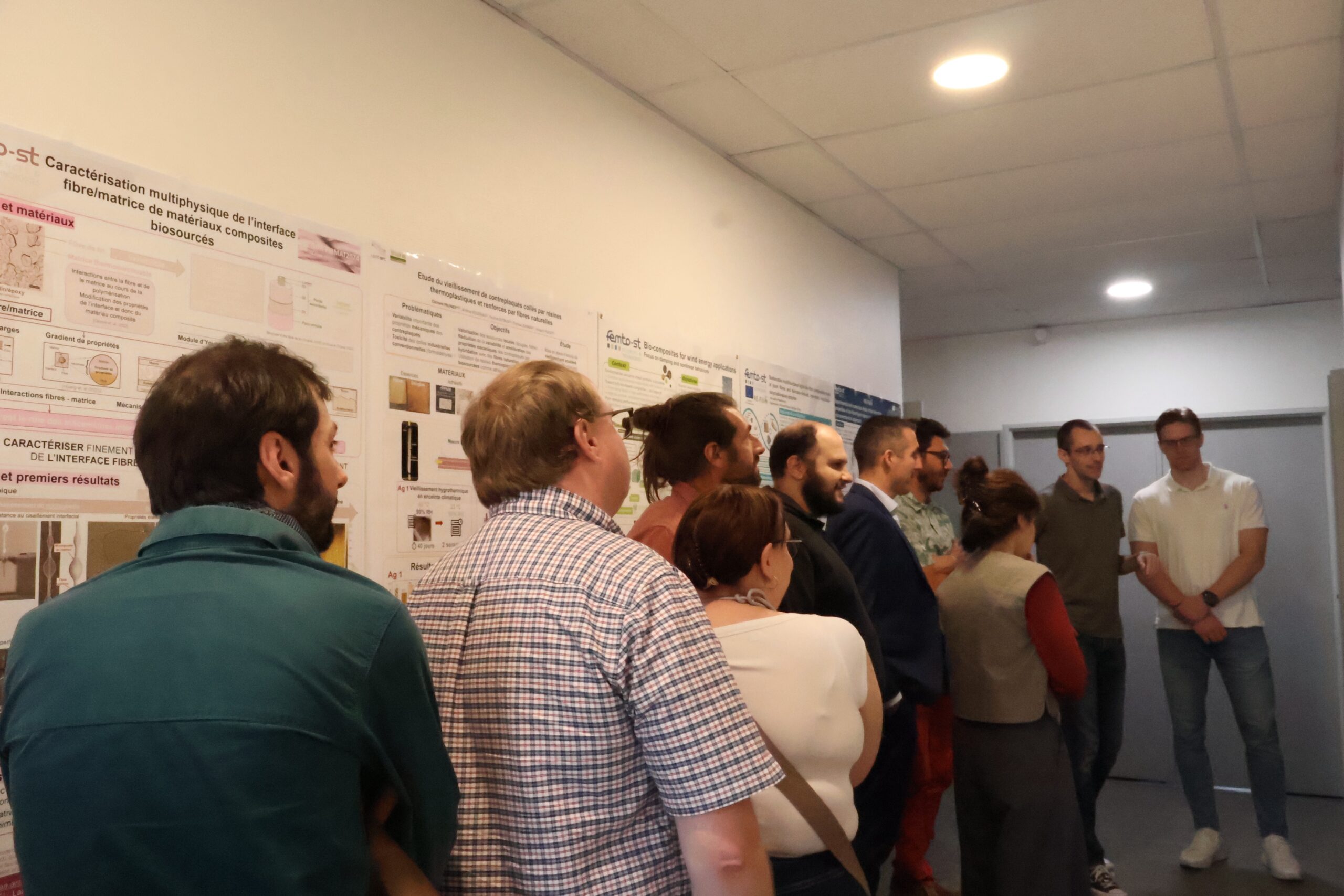 The meeting started on Tuesday morning with a laboratory tour hosted by UMLP and FEMTO-ST, giving partners an opportunity to discover some of the experimental facilities and techniques available in Besançon. The visit covered X-ray tomography for composites, fibres and textiles, mechanical testing approaches, elementary fibre vibration, interface characterisation, as well as facilities including the CMNR, Pôle Vib and MIMENTO.
After the visit, project coordinator Aart W. van Vuure from KU Leuven officially opened the meeting before the consortium moved into a first series of Work Package updates. The presentations provided an opportunity to review the technical progress achieved since the previous Consortium Meeting and to connect developments taking place across the different parts of the project.
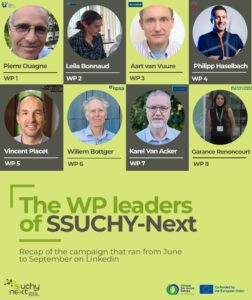
Pierre Ouagne and the WP1 partners opened the technical sessions with an update on fibres, highlighting progress in the industrial-scale production of hemp reinforcements, including UD Hemptape®, quasi-UD and biaxial materials for the project demonstrators. Partners also presented ongoing work to optimise fibre processing and quality, from hackling and defect reduction to the preparation of larger material volumes for the next manufacturing steps.
Leila Bonnaud and the WP2 partners then presented progress on bio-based resin systems, with promising developments across the different formulations investigated in the project. The team highlighted ongoing optimisation and scale-up activities to adapt these materials to composite manufacturing and prepare their integration into the project’s demonstrators.
Aart W. van Vuure and the WP3 partners then presented progress on composite performance, including the mechanical behaviour, durability and damping properties of the newly developed hemp-based composites. The latest results are helping to better understand how these materials perform under different loading and environmental conditions and to prepare their integration into the wind turbine blade demonstrator.
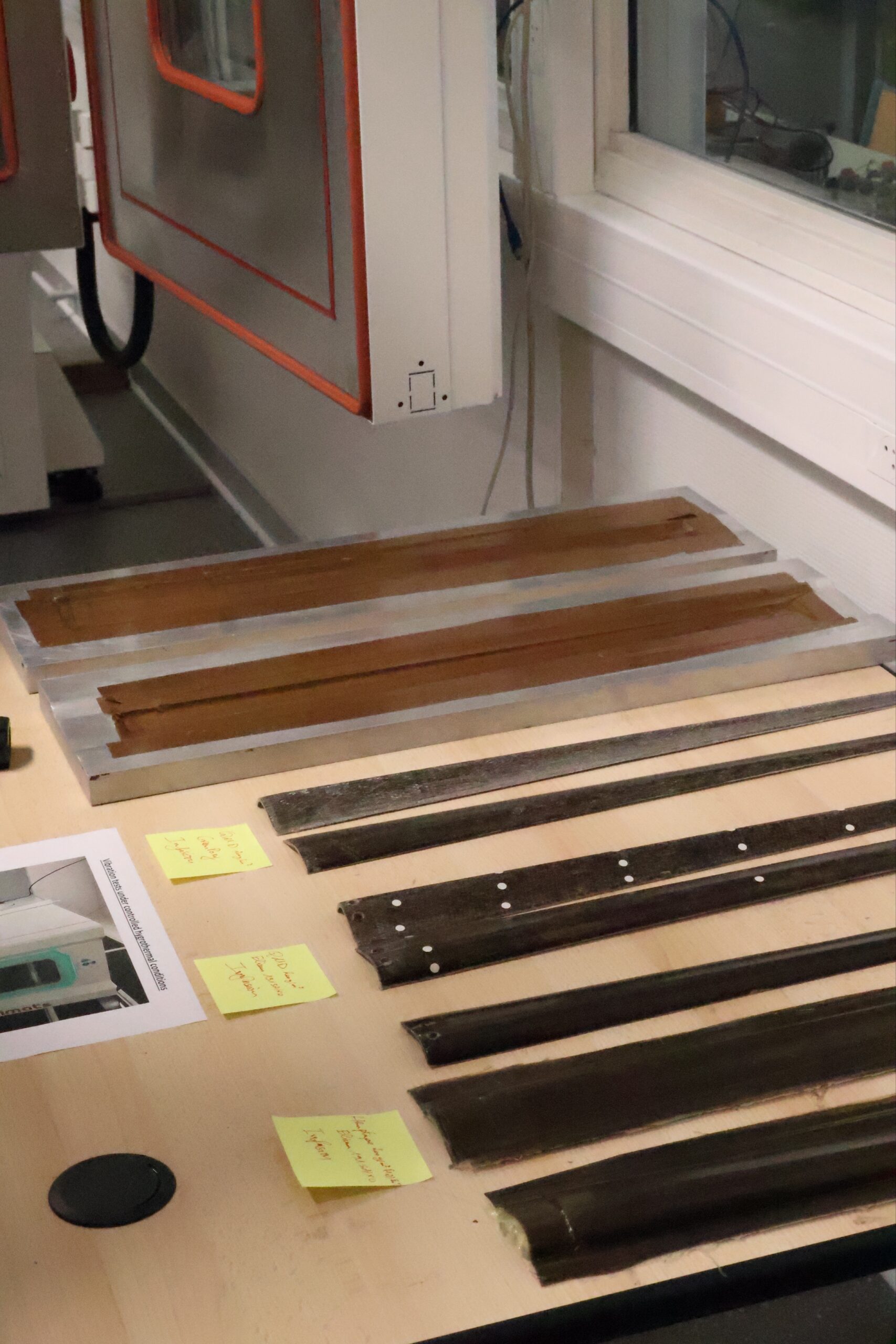
Philipp Haselbach and the WP4 partners then presented progress towards the 12.6-metre wind turbine blade demonstrator, with ongoing work on material characterisation, blade design and the optimisation of the manufacturing process. Preliminary simulations are being used to assess different hemp/Elium® configurations and refine the blade design ahead of full-scale manufacturing and testing.
Vincent Placet and the WP5 partners concluded the technical sessions with an update on the development of hybrid wood-hemp materials for construction applications. Results highlighted the potential of hemp reinforcements to improve the mechanical performance of STACK™, alongside ongoing work on alternative bio-based resins and the optimisation of the material for future scale-up and industrial applications.
These exchanges highlighted the links between fibre production and characterisation, resin development, composite processing and performance, and the different end-use demonstrators at the heart of SSUCHY-Next.
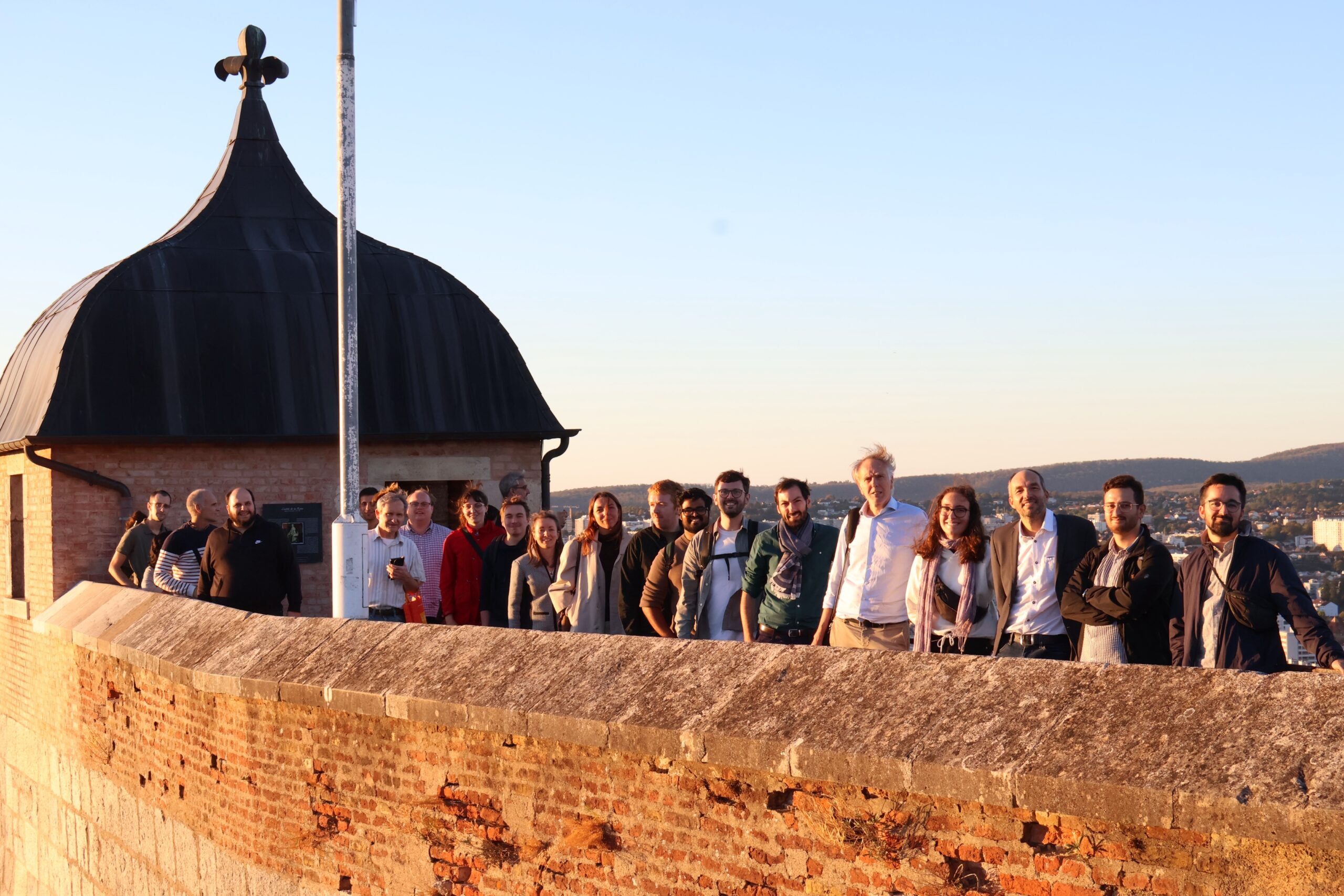
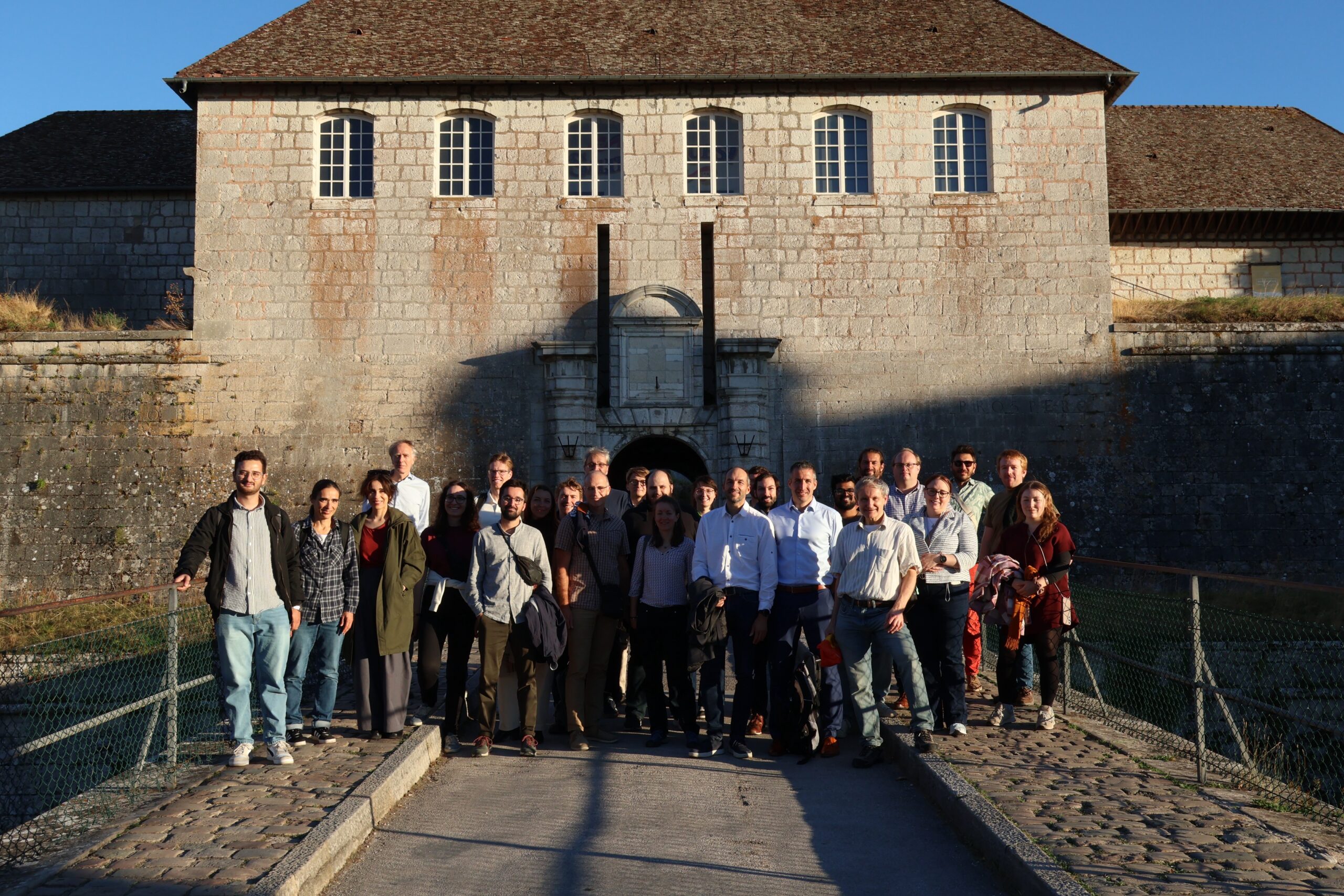
The first day ended outside the meeting room with a guided tour of the Besançon Citadel ramparts, followed by a standing dinner reception. Beyond the technical programme, this informal time gave partners another opportunity to exchange ideas and strengthen collaboration across the consortium.
From building applications to circularity
 The second day continued with the remaining Work Package presentations.
The WP6 partners presented progress on the development of bio-based Bulk Moulding Compounds (BMCs) for building and construction applications, combining natural fibres, fillers and different resin systems. Work is advancing on material formulation and processing, alongside the development of predictive models to support the design and optimisation of future façade panels and other prototypes.
Willem Böttger and the WP7 partners presented progress on end-of-life, recycling and Life Cycle Assessment (LCA), with the first environmental assessment highlighting key eco-design priorities across the SSUCHY-Next value chain. Partners also shared advances in mechanical and thermomechanical recycling routes for the project’s wood-based composites and building products, while preparing recycling solutions for the wind turbine blade.
The meeting then continued with Garance Renoncourt, who provided an update on WP8 activities related to communication, dissemination and exploitation, including recent achievements and upcoming actions. Finally, Alexandros Prapavesis and Aart W. van Vuure concluded the sessions with a WP9 update on project coordination and management, reviewing the project’s overall progress and the next key steps.
A closer look at the wind turbine blade demonstrator
One of the main highlights of the meeting was the dedicated workshop on wind turbine blade design, led by Philipp Haselbach.
The session brought together partners working across the different technical areas of SSUCHY-Next to explore how their respective developments come together in one of the project’s most ambitious demonstrators. It provided a broader understanding of the different steps involved in designing and manufacturing a wind turbine blade, from the loads and structural requirements to material selection, numerical simulations and blade architecture. Philipp also walked the consortium through the main manufacturing stages, including mould preparation, material lay-up, vacuum infusion, assembly and demoulding, before addressing the validation and testing of the final blade.
The wind turbine blade workshop closed the technical programme of the Consortium Meeting and offered a concrete example of how collaboration across SSUCHY-Next is translating research results into industrial-scale applications.
What’s next?
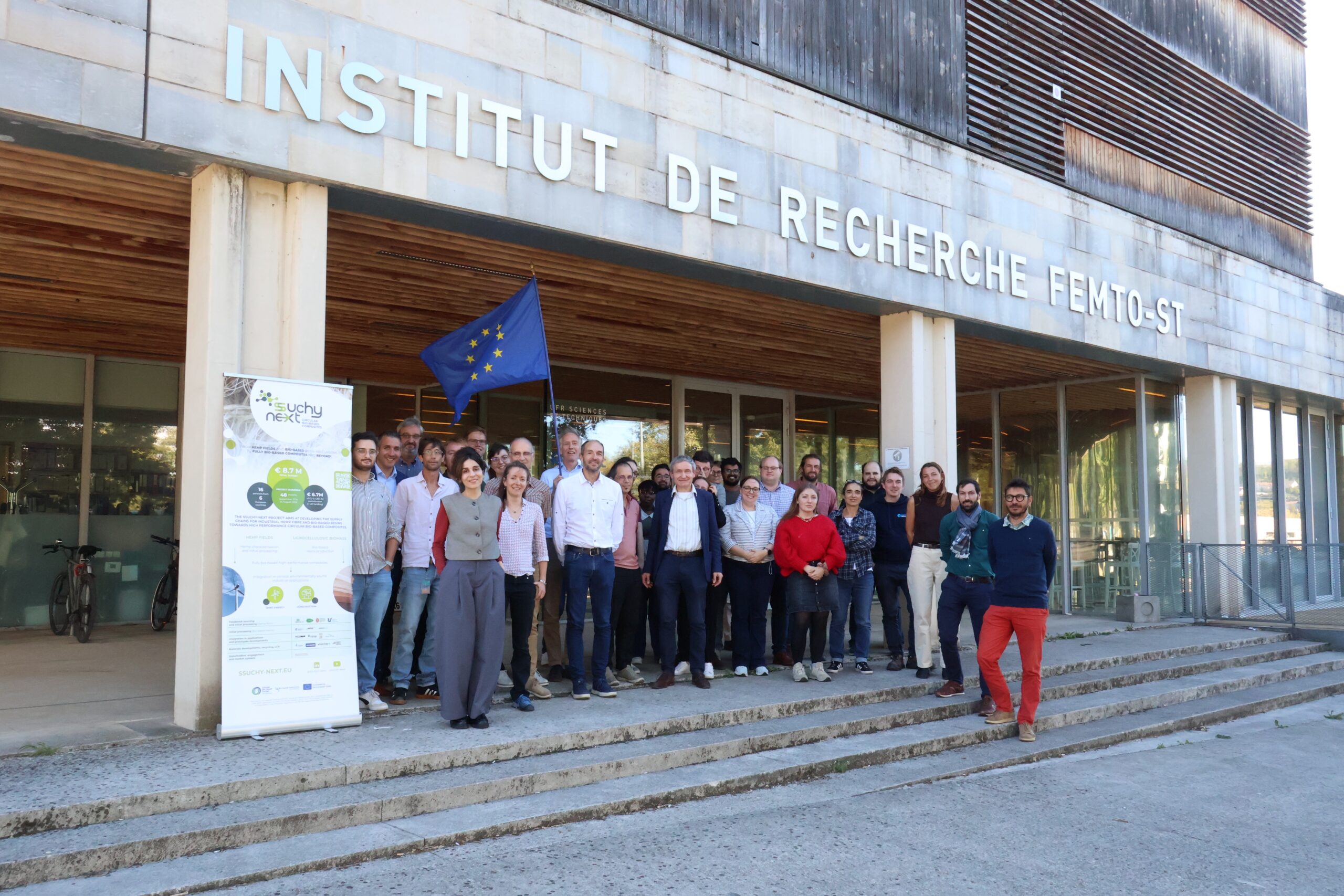
With the 5th Consortium Meeting completed, partners are now moving into the next phase of technical development, building on the discussions and results shared in Besançon. Work will continue across the different Work Packages, with particular attention to scaling up materials and processes and advancing the project’s demonstrators.
Partners will meet again for the 6th SSUCHY-Next Consortium Meeting, hosted by CETIM in Mulhouse.

No comment yet, add your voice below!